Wednesday, October 31, 2012

David Koepp & Pete Travis: Premium Rush & Dredd

Slapping unexpecting young audiences awake from a narcotized bad movie stupor,  genre auteurs David Koepp and Pete Travis revel in two of their headiest works.

JGL, Michael Shannon, Premium Rush, Columbia Pictures, 2012.


Koepp made a name for himself scribing Spielberg's key popcorn films; adapting Jurassic Park and Minority Report, he displayed his articulate grasp of the action-sci-fi genre, while holding onto a human element that is indispensable to his cinematic world view. Aside from scripting for 70s masters Spielberg and De Palma, Koepp helmed a few interesting pictures of his own. The Trigger Effect, Stir of Echoes, and Secret Window are all dark, corrosive movies which revealed Koepp as a serious film artist, one hand firmly on his heart, the other digging in an overpriced bucket of corn. For all of their cohesion, all three films suffer from an open-endedness that denotes near sublimity. While his newest work, the action-thriller Premium Rush, may appear to be less noteworthy than his first three films, its reliance on CGI-fueled action set pieces, and its novel plot, allow it room to breathe and for us to experience American genre in a fresh new way.

Joseph Gordon Levitt, riding on high in his breakthrough year, fills the lead role effortlessly. His sardonic young East coast bike messenger, feels like a hero Cagney would have filled yesteryear. The plot is hackneyed and beaten to death, but apparently that is the point. Koepp utilizes cliche to realize something original for this kind of clap trap; transcendence. Michael Shannon makes for one of the most bizarre villains of the year; he is truly inspiring. James Newton Howard has fun with his jaunty music score, accentuated by dark undertones. Its undeniable popcorn trash at its finest.

Karl Urban, Dredd, Lionsgate Films , 2012.


Director Pete Travis is not quite as known as Koepp. Starting out at the BBC, he displayed an early gift for melding introspective characterization with a keen sense of filmic rhythm and cinematic space. His early films Vantage Point and Endgame, were both intelligent political thrillers displaying a filmmaker with a strong sense of mise en scene. His new picture, Dredd, is based upon Carlos Ezquerra's culty 80s comic about a partly robotic cop. This premises allows Travis to explore all  of the geo-political themes he underlined; corporate greed, martial law, violence as an extension of money and power.

Karl Urban makes for a commanding male protagonist, all glowers and mumbles as Dredd. Master Director of Photography, Dane Anthony Dod Mantle, captures the otherworldly slow burn of a city at apocalypse.Novelist cum script writer Alex Garland, has fun within the confines of the genre.

Although many would consider this puerile surface level shit, that would only be gleaning the surface. Travis' subtext and visual style are refined and kinetic. Dredd shines then bleeds Hawks, Fuller, Verhoeven. Pete Travis pays homage to his forefathers, unofficially joining their ranks as one of the most underrated of up-and-coming genre auteurs.                                                                                                                                                                                                                                                                                                                                                                                                                                                                                                                                                                                                                                                                                                                                                                            

Sunday, October 21, 2012

David Cronenberg: Cosmopolis

Paul Giamatti, Robert Pattinson, Cosmopolis, Entertainment One, 2012.


One of our main modern masters, Cronenberg returns to indifferent cineplexes triumphant once again. Fresh from his meticulous period passion play A Dangerous Method, the great maestro steers back into more familiar territory with an allegorical adaptation of a darkly comedic Don DeLillo novella.

Cosmopolis may well be the helmer's most personal film, akin to the films which earlier made his name. Lacking the body horror of those singular gems, his newest work is almost entirely set in a car; the ominously stylized tone recalls one of his very best, the existential visual dread of Crash (1996). Robert Pattinson gives a brilliantly modulated performance which erases bad memories of shitty Twilight movies; his co-stars make up one of the most dynamic casts of the year; Paul Giamatti, Juliette Binoche, Samantha Morton, Jay Baruchel, spellbinding ingenue Sarah Gadon. Their interplay as directed by Cronenberg builds a wall of austere despair that is one of the most incisive and expressive portrayals of the capitalist malaise our country is mired in.

Cronenberg works with his usual crew to spin his most shattering web in some time. DP Peter Suschitzky goes a long way to give the maestro's films their distinct appearance and feeling of disconnect via symmetry and lighting; Howard Shore's music score is teeming with angst. These elements bind together Cronenberg's unreal foretelling of East Coast ennui and moral bankruptcy. The trajectory of an upper crust young Wall Street upstart making his way across a pseudo-apocalyptic NYC, and the "odd" characters he encounters offers the maestro a simple plot to enrich his cinematic field of vision by.

The uber-stylized dialogue has been found impenetrable by many; it is transferred almost identically from the text; the movie almost becomes Cronenberg's commentary on the ouevre of novelist DeLillo, and the very nature of the beast of novel to film adaptations.

Friday, August 31, 2012

Chris Butler and Sam Fell: ParaNorman

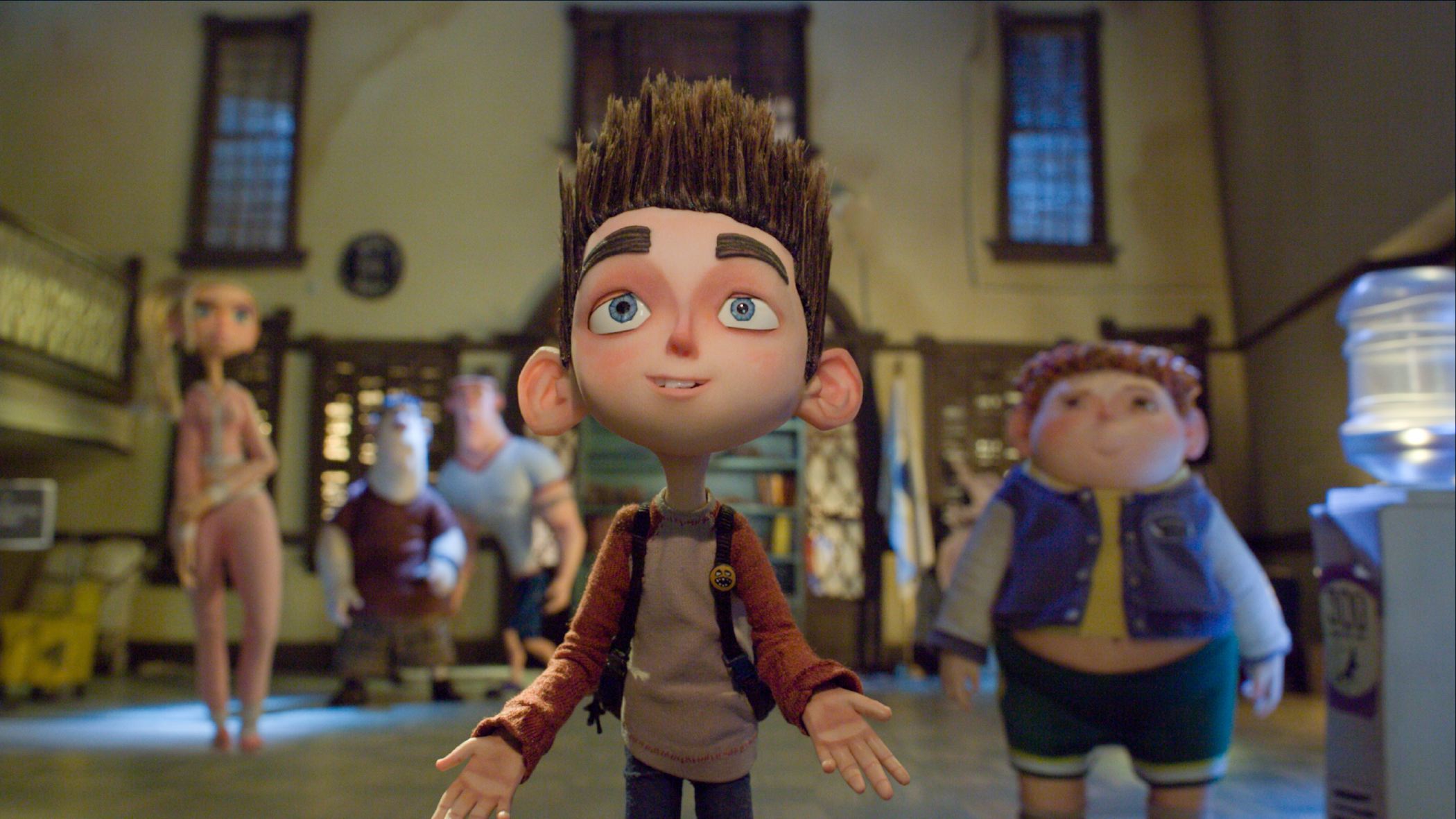
ParaNorman, Focus Features, 2012.


Under the tutelage of American animation maestro Henry Selick, Chris Butler, an immensely talented young storyboard artist on Burton's Corpse Bride and Selick's Coraline, realizes his own dreams with the best animated movie of the year thus far, the transporting ParaNorman.

Butler and co-director Sam Fell both cast a middle American town in the fractured clay fortitudes of Selick's style, and yet its markedly different, rougher if you will. Butler and fell construct a giant homage to the 1980s films they loved, especially The Goonies and The Monster Squad, with a touch of Shyamalan's The Sixth Sense thrown in for good measure. Yet it works fiercely on its own. So many little touches demand multiple viewings; the inexplicable beauty and emotion of it all are bewildering. We are not used to animated movies this heavy!

Norman is an outsider, a little boy mocked at school in his small New England town, because he can talk to ghosts. He builds a ragtag group of friends to battle a witch's curse on their village. This simple plot gives no hint at the pure pleasures of the world these talented directors have crafted; touching on themes of disaffected youth, technology as a death knell to human interaction, media blitz, childhood, death. ParaNorman is not your average kids flick, this one is an instant classic.

David Frankel, Tony Gilroy, Jay Roach, and Peter Hedges: August Crowd Pleasers

David Frankel . . . . . .  a talented workman, Frankel showed visual pizzazz and smarts with his directorial debut, the adaptation of The Devil Wears Prada. Marley and Me was a sentimental film done right, and The Big Year was a sleeper comedy nobody saw last year starring Steve Martin, Jack Black, and Owen Wilson.

Meryl Streep, Tommy Lee Jones, Hope Springs, MGM, 2012.


Hope Springs, a marvelously mature studio film, takes its characters and subject seriously enough to have us laugh with them. Vanessa Taylor's original screenplay is very well written and Frankel handles the proceedings with verve, while Meryl Streep and Tommy Lee Jones deconstruct an aging troubled marriage brilliantly. Steve Carrell is at his best as their marriage counselor at a paid getaway, but its Jones who stuck in my mind the most. He's never given a performance like this before. The way he communicates anger, loneliness, frustration, all wrapped up in an American any man makes for some of his best work in years.

Tony Gilroy . . . . . ace screenwriter behind the fun Bourne movies starring Matt Damon and directed by underrated Doug Liman initially, and then British visionary Paul Greengrass, Gilroy had the directorial debut every screenwriter dreams of. Michael Clayton was like a well calibrated machine, slick, steely, hypnotizing. The legal thriller reminded of 70s ballsiness in its refusal to kowtow to audience expectation. He was nominated for an Oscar as best director, as was his film as best picture. His actors, George Clooney and Tom Wilkinson, were nominated, while their costar Tilda Swinton deservedly won for her villainess.

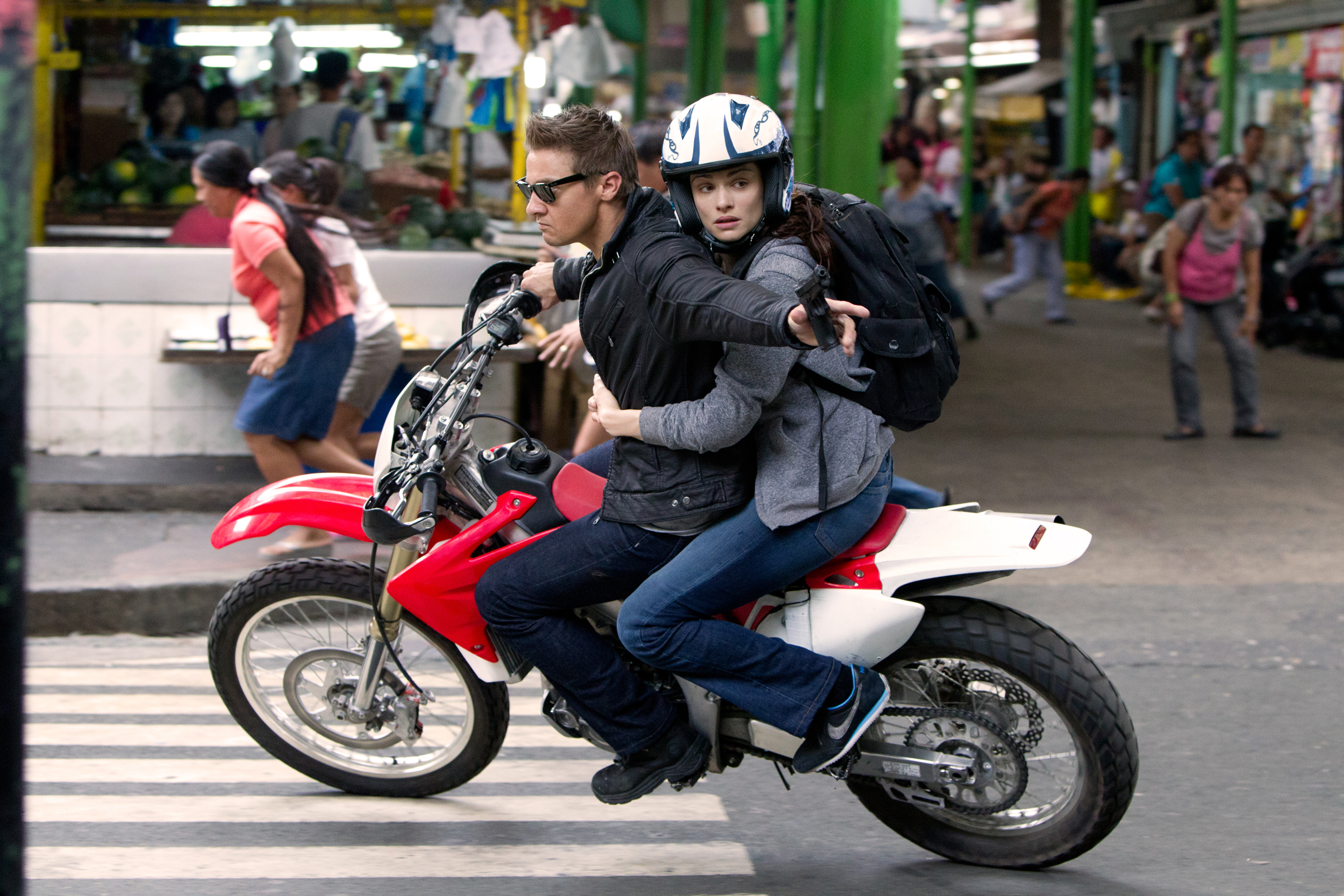
Jeremy Renner, Rachel Weisz, The Bourne Legacy, Universal Pictures, 2012.


His second feature, Duplicity, was a fun, more mainstream, smart romantic comedy starring Julia Roberts and Clive Owen. His third feature is the much debated fourth entry in the Bourne series, not based on a Robert Ludlum novel, but from a dense, convoluted, intelligent original screenplay by the director, who really pulls a feat here by making the picture work minus its tentpole star, Matt Damon. While Jeremy Renner is more of a character actor, he straddles that fine line as almost a lead. Here, he commands the screen as another agent who becomes drawn into a labrynthine plot to track the "real" Jason Bourne. Exotic locales, bristling dialogue, scenery chewing abound. Gilroy is a stylistically muscular director; he is equally capable of directing a good action sequence as writing a great dialogue. Edward Norton, Rachel Weisz, Scott Glenn, and Stacey Keach are all in top form. Gilroy's third feature is a fun action film with guts.

Jay Roach . . . . . . an underrated comedic director, he is noteworthy as the man behind the 60s spy spoof series Austin Powers, he also helmed the sleeper Mystery, Alaska, he's also the man behind the initially funny, gradually terrible Meet the Parents series. Most recently he helmed the interesting misfire Dinner for Schmucks, before doing some of his very best work earlier this year with the HBO movie Game Change. Detailing the McCain-Palin presidential bid with tongue planted firmly in cheek, it afforded Julianne Moore, Ed Harris, and Woody Harrelson some of ther best roles of their careers.

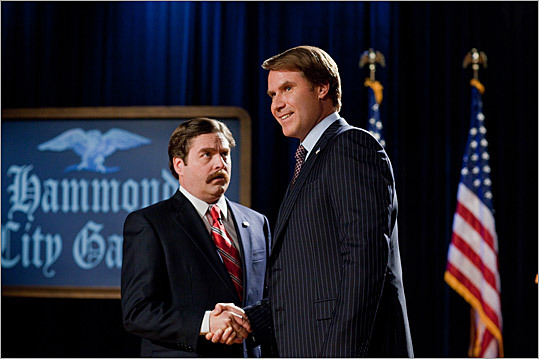
Zach Galifanakis, Will Ferrell, The Campaign, Warner Bros., 2012.


How fitting that Roach's almost simultaneous excursion into the multiplexes be the frequently hilarious and over all well made political comedy The Campaign. Will Ferrell and Zach Galifanakis both are at their most surreally funny as equally moronic adversaries in a race for a seat in the state senate. Its all ridiculous and not all of it works, but the parts that do make up for the others. Its another triumph for Ferrell, after the brilliant Casa de mi Padre earlier this year. Roach knows how to bring things just to the right pitch of bizarre hysteria, how to frame for maximum physical comic effect, and how to wring laughs out of the most randomly peripheral things.

Peter Hedges . . . . is another screenwriter cum director, who initially wrote Lasse Hallstrom's best film, What's Eating Gilbert Grape? (1993), before embarking on his own directorial journey. Pieces of April (2003) was his warm, funny, humane debut, a year after he co-wrote with the Weitz Bros their masterful drama About a Boy. Both films were Oscar nominated. His sophomore feature, Dan in Real Life (2007) starring Steve Carrell, was sweet and funny and sad. His third feature, The Odd Life of Timothy Green, has alot of heart, and for a sentimental Disney family film, is one of the most sincere I've seen in some time.

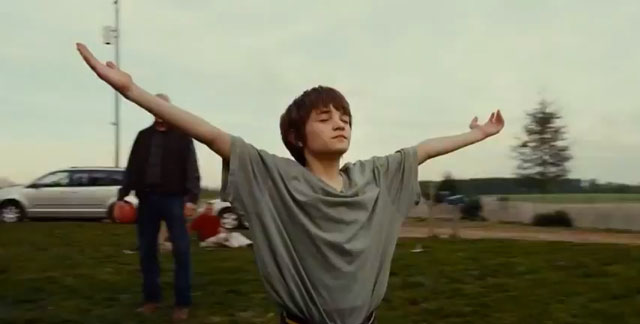
C.J. Adams, The Odd Life of Timothy Green, Walt Disney Pictures, 2012.


Jennifer Garner and Joel Edgerton are the couple who cannot conceive; through a strange miracle, precocious Timothy (C.J. Adams) comes into their lives. Based on a story by Ahmet Zappa, Hedges brings his human touch, ear for real dialogue, and eye for visual space to the magical project and makes it succeed sweetly as his own.

These four films represent studio film making, if not at its best, than at its most harmlessly well done.

William Friedkin: Killer Joe

Matthew McConaughey, Killer Joe, LD Entertainment, 2012.


Brilliant and abrasive, 70s American master William Friedkin's new film Killer Joe is a blast of narrative ingenuity that feels like it could be the first film of a hot young director, it flows that madly. Adapted by Pulitzer-prize winner Tracy Letts from his own controversial stage play, visionary Friedkin transforms Letts' blueprint into a trailer trash neo-noir as energetic as his masterful film debut, the incredibly surreal Good Times (1967) starring Sonny and Cher.

Friedkin's mise en scene is deliciously precise, claustrophobic, stagey yet free in its visual dynamics and character movement. Its one of Friedkin's most important works, comparable in its own curious way, to The Boys in the Band, The French Connection, The Exorcist, Sorcerer, Cruising, To Live and Die in L.A., and most recently, his other adaptation/collaboration with Letts', on the mind-blowing Bug.

Matthew McConaughey, just as Michael Shannon in the aforementioned Bug, gives the performance of his career. Letts' preoccupation with men straddling the line of reality and insanity meets Friedkin's career long exploration of American masculinity in all of its great mystery; masculine violence is usually the transcendent climax. McConaughey's southern braggadocio is crystallized by his inception into this dark union. Psychopathic hitman cop Joe is one of this year's great characters, and the actor's interpretation of him is the stuff of legend.

All the other characters are perfectly deplorable in that sublime Cain-Thompson fashion. Emile Hirsch, Gina Gershon, and Thomas Haden Church are all at their blistering best. Multiple sequences spellbind with the power of Friedkin-Letts' cinematic marriage. But Juno Temple is the film's other acting revelation. Her naive, sweet Dottie is a femme fatale in reverse; her performance is amazing.

Master cinematographer Caleb Deschanel regally lights up the trailers and dive bars of Friedkin's vision. Tyler Bates' music score is textural and simple, perfect accompaniment for these savage rubes. The dark side of humanity hasn't been done this well in some time; Friedkin nails it with another one of his masterworks.

Jonathan Dayton & Valerie Faris: Ruby Sparks

Zoe Kazan, Paul Dano, Ruby Sparks, Fox Searchlight Pictures, 2012.


Flying high on the indie-fumes of a meta-film meltdown, pseudo-indie helmers Dayton and Faris, of Little Miss Sunshine fame, concoct a fun and diverting little Summer indie with the indefatigable Ruby Sparks.

Adapted from an original screenplay by talented young actress-writer Zoe Kazan, the movie mostly works in starts and fits, its a sporadic pleaser much like its predecessor. Sparks, our fiery red haired heroine, is actually a fictional character who springs magically from the mind of a young writer played well by Paul Dano. The odd rom-com whirlwind she takes him on makes up for most of the picture. Some of it works, some of it doesn't. Dayton and Faris are good at pulling quirky performances from their diverse casts; their progressive narrative flow and framing aren't their strong suits.

Kazan is a zany revelation, balancing just the right amount of sweet and looney, as she realizes she does not really exist. Dano is strong as the masculine center of the movie.  Antonio Banderas, Annette Bening, Steve Coogan, and Elliot Gould all have fun with their supporting roles. A mild seasonal Sundance selection, Ruby Sparks is a worthy diversion to get out of the heat and into the a/c.

Todd Solondz: Dark Horse

Selma Blair, Jordan Gelber, Dark Horse, Vitagraph Films, 2012.


One of the most narratively original films of the year, Todd Solondz's daring comedy-drama Dark Horse, is worthy of all your attentions and cinematic devotions. The dark comedy master from New Jersey serves us one of the most subtly powerful films of his career. Taking inspiration from Paddy Chayefsky's 1950s stage classic Marty, and Delbert Mann's subsequent Oscar-sweeping film version, by way of Woody Allen's wonderfully surreal fantasy streak, as his starting point for a work of art that is truly transformative.

Jordan Gelber is shattering as our pathetic protagonist, a middle aged schlub still living with his aging parents (Christopher Walken and Mia Farrow, both superb). He works with his Dad at the family business, where Dad's secretary Marie (an amazing Donna Murphy) looks longingly at him from her desk. His world begins crashing around him, after he becomes smitten with a strange, medicated woman (Selma Blair) who also lives with her parents. Their awkward courtship bookends the interconnecting fantasies and dreams of all of the characters, until Solondz has obliterated our perceptions of filmic "reality".

The pure inspiration flowing through Solondz's little world, the dignity he affords his fractured characters, grants us a glimpse inside one of our country's great directors; he has had yet another triumph in a long string of masterpieces: from Happiness to Life During Wartime, and now this, one of his strongest creations. Along with Wes Anderson, we are witnessing the maturation of the 1990s indie auteurs into integral American masters.